The Tour Guide Test: How to Tell a Great Guided Tour From an Overpriced Bus Ride
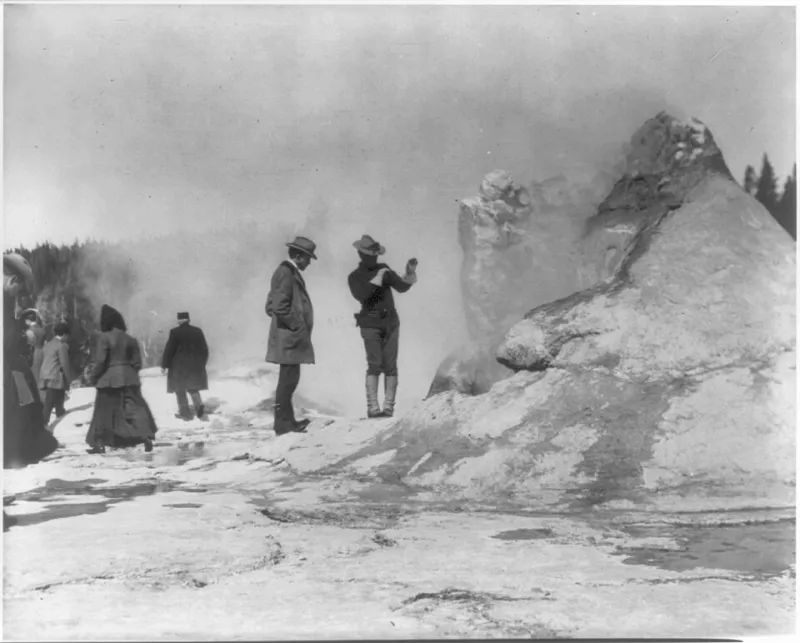
Photo: Miscellaneous Items in High Demand, PPOC, Library of Congress, Public domain, via Wikimedia Commons
Every city has one. The tour that promises fifteen landmarks in four hours, costs $189 a head, and ends with you standing in a gift shop parking lot, squinting at your phone, trying to figure out where the day actually went.
We run tours for a living, so it would be easy — and a little dishonest — to tell you that booking a guide is always the answer. It is not. Some guided experiences are worth every dollar and then some. Others are a bus ride with a souvenir keychain stapled to it. The difference is rarely visible in a brochure photo.
So here is the checklist we would hand a friend. Use it before you hit the Book button.
Question 1: How many people are actually coming?
Ask for a hard number, not a vibe. 'Small group' is a marketing phrase, and it can mean anything from eight people in a van to forty on a coach.
As a rough rule: under twelve guests, you can ask questions, hear the guide, and slip into a side street without the whole group following like a parade. Over twenty-five, you are on a logistics operation. That is not automatically bad — big-bus city loops can be genuinely efficient for orientation on day one — but you should stop expecting a personal experience and start expecting a schedule.
Look for the phrase 'maximum group size' with a number attached. If the operator will not commit to one, that tells you something.
Question 2: Who is holding the microphone?
Ask what the guide's actual qualifications are: licensed by the city, a trained historian, a working chef, a naturalist, a longtime resident with a story? Any of those can be excellent. What matters is that the answer is specific.
Vague answers are a warning. 'Passionate local experts' is a slogan, not a credential, and it often means an independent contractor who learned the route last month. A great guide is the entire product. The van is just the van.
Question 3: How many minutes are on your feet?
This is the number almost nobody advertises, and it changes everything. A 'four-hour highlights tour' can easily be three hours of driving and forty minutes of walking. Ask directly: how much of the tour is walking, and where?
Walking tours exist in a different category entirely. You feel the neighborhood, you smell it, you stop when something is interesting. If the description is heavy on 'air-conditioned coach' and light on actual stops, price it as a bus ticket, not a guided experience — and decide whether that is what you want.
Question 4: What is not in that price?
Here is where the sticker price stops telling the truth. Common add-ons to check for:
- Admission fees. Some tours quote a low headline price and then collect entry fees on the day, sometimes at a markup.
- Food and drink. 'Food tour' should mean the food is included. Confirm how many tastings and whether drinks cost extra.
- Gratuities. Customary in the US, but ask if tips are expected on top of an already premium price.
- Transport between stops. Subway fares, taxis, ferry tickets.
- The 'skip the line' claim. A timed entry is not the same as walking past everyone. Ask what you actually skip.
Add those up before you compare two tours. A $95 tour that costs $60 in extras is a $155 tour.
Question 5: Is there free time, and is it real?
Free time is not filler — it is the difference between a tour and a leash. Fifteen minutes to photograph a market is not free time; it is a photo stop. An hour to wander and buy lunch is.
And be skeptical of the reverse: a tour that ends with an unscheduled two-hour block at a shopping district that happens to be paying the operator. It happens more than you would like to think.
Question 6: What happens if the day falls apart?
Read the cancellation policy like a lawyer. Three things to look for:
- Your cancellation window — full refund how many hours out? 48 hours is fair, 7 days is stiff, no refunds at all is a red flag.
- Their cancellation policy — if they cancel for weather or low enrollment, do you get cash back or a voucher you can only use with them?
- Weather policy — for outdoor and boat tours, specifically. 'Tours run rain or shine' is fine for a city walk, less fine for a kayak.
Also check whether you will be folded into a partner company's tour because your group did not fill. It is common, it is legal, and it is worth knowing.
When do-it-yourself wins
Some places do not need a guide, and paying for one is paying for company. If you are a confident planner, a well-documented museum or a compact historic district is often better solo, on your own pace, with an audio guide and a long lunch.
Guided tours earn their price when they unlock something you genuinely cannot access alone: a private after-hours entry, a working kitchen, a guide who can walk you into a community you would otherwise only photograph from the sidewalk. That is the value. Not the bus.
Red flags that should end the conversation
- The price is strangely low and the itinerary is suspiciously full.
- No named guide, no group size, no cancellation terms on the booking page.
- Reviews mention 'rushed' or 'mostly driving' more than once. Believe them.
- A tour that 'guarantees' skip-the-line access without naming the venue.
- Any pressure to book today for a discount that expires in an hour.
One last thing: email the operator a question before you book. Ask about the group size or the walking distance. The speed and specificity of the answer is the cheapest test you will ever run — and it tells you more than any glossy landing page.