Follow the Fork: What a City's Food Says About Who Lives There
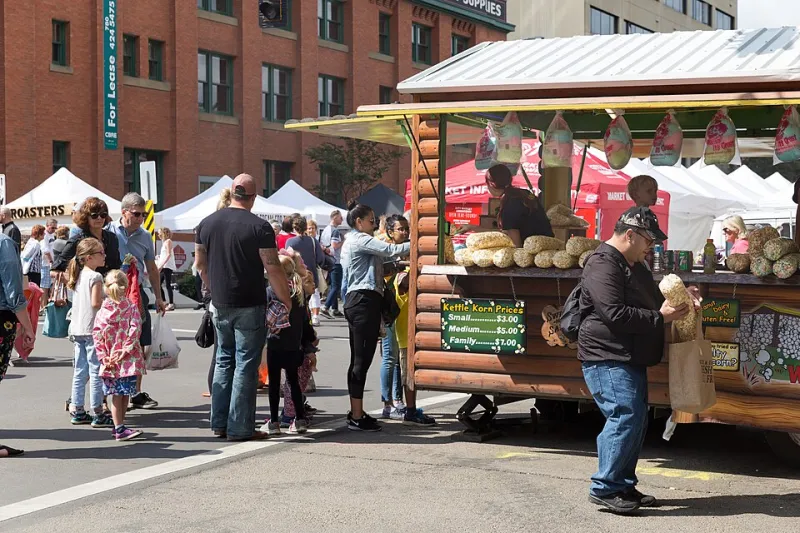
Photo: Mack Male from Edmonton, AB, Canada, CC BY-SA 2.0, via Wikimedia Commons
There's a moment that happens on almost every good food tour. The group is standing on a sidewalk corner — maybe in New Orleans, maybe in Oaxaca, maybe outside an unassuming strip-mall pho spot — and the guide says something like, 'Now, this family has been making this dish for three generations.' And suddenly the city clicks into focus. Not the skyline version. The real one.
We've become convinced that the single fastest way to understand a new place is to eat your way through it. Here's why.
Museums Tell You What a City Remembers. Food Tells You What It Is.
Every destination curates itself. The visitor center shows you the highlights. The guidebook shows you the classics. But a city's food scene — especially the parts locals actually frequent — is uncurated by nature. Immigrant communities, economic shifts, agricultural history, class divides, neighborhood pride: it's all sitting right there on the plate.
Order a plate of pupusas in a Los Angeles strip mall and you're tasting decades of Salvadoran migration. Eat a hot brown in Louisville and you're absorbing a century of railroad hotel culture. The banh mi you grab in Houston's Mahatma Gandhi District carries a story about war, resettlement, and reinvention that no plaque could deliver.
Solo travelers, especially, tend to discover this. When you're eating alone, there's no one to perform for. You sit at the counter, you talk to the person next to you, and you learn things no itinerary would have surfaced.
What the Guides Say
We talked with food tour guides in a few cities, and one theme came up over and over: their job isn't really feeding people. It's translating.
A guide in Philadelphia told us she structures her Chinatown tours around the story of the neighborhood's generations — the first arrivals, the families that stayed, the new wave of immigrants from Fujian reshaping the menus today. 'By the third stop, people aren't asking me about the dumplings anymore,' she said. 'They're asking about the neighborhood. That's the whole point.'
A traveler we met in Mexico City put it more bluntly: 'I did the pyramids, I did the museums. But I didn't get this city until I ate tacos de suadero at a stand where the guy explained which salsa goes with which meat. That was the moment it stopped being a vacation and started being a place.'
Standout Food Experiences Worth Building a Trip Around
A few that consistently deliver:
- New Orleans, Louisiana: Beyond the beignets, a proper tour of the Treme or Marigny neighborhoods connects Creole, Cajun, and African food traditions to the birth of American music. Come hungry; leave conversant.
- San Antonio, Texas: The UNESCO-recognized missions are famous, but the city's puffy taco and barbacoa scene is a masterclass in Tex-Mex history.
- Bangkok, Thailand: Street food tours through Chinatown's Yaowarat Road at nightfall are sensory overload in the best possible way.
- Lisbon, Portugal: A tasca crawl through Alfama pairs ginjinha and bifana sandwiches with fado, tiled alleys, and a city that wears its history casually.
- Chicago, Illinois: A tour through Pilsen or Argyle Street tells the story of the Midwest's great migrations one plate at a time.
How to Find the Real Thing (and Skip the Tourist Trap)
Not all food tours are created equal. Some are genuinely local; others are a conga line to the same three restaurants every guidebook mentions. A few ways to tell the difference:
- Look for small groups. If a tour caps at 8–12 people, guides can actually talk to you. If it caps at 40, you're on a bus.
- Check who's leading it. Locals, chefs, and longtime residents beat out corporate franchises every time.
- Read what people ate, not just the star ratings. Reviews that mention specific dishes, family stories, and neighborhoods are a great sign.
- Go where the lines are local. Even without a tour: if a lunch counter is packed with people in work uniforms at noon, that's your restaurant.
- Ask the question. Wherever you eat, ask the person behind the counter what they recommend. It's the smallest possible gesture and it opens more doors than any app.
The Takeaway
You can learn a lot about a city from its landmarks. But landmarks are how a city introduces itself. Food is how it talks about itself when it thinks no one's listening. Next trip, skip one attraction and add one meal that scares you a little. Sit at the counter. Ask questions. That's where understanding starts — usually with a napkin in your lap and something delicious you can't quite pronounce.